Friday, March 16, 2012

Collaborations with H&M


Collaboration can be defined as "coming together to work toward a common vision." The collaborative process is intended to move participants away from the traditional definition of power as control or domination and towards a definition that allows for shared authority. This results in greater achievements than would be attained by one organization working alone. (NICIC 2004) 
  
Reasons for collaboration can be different for different company. H&M make collaboration because they will became more popular and increase their profit. For different companies with which H&M collaborated were reasons different. For example Versace decided to collaborate with H&M because 
''I know that with H&M collaboration I am going to reach a much wider audience than usual. When I am going to see young people walking in the street wearing iconic pices, its going to be fun'' (Versace 2011).

One of the most famous collaboration of H&M was with Jimmy Choo. Collection was available in shops in November 2009.

H&M and Jimmy Choo


The collection was focused on nigh out clothes like shoes, evening dresses, handbags and pumps. The range was from £30 to £70 but some dresses were over £100. Designes were much cheaper than genuine Jimmy Choo lines and little bit more expensive then H&M lines but definitely was affordable, H&M 2009.

Jimmy Choo collection for H&M
The full collection is available on: http://www.youtube.com/watch?v=lwrsG7siYA0

The collaboration was a big success and it brought other collaboration with Lanvin, Stella McCartney, Sonia Ryckiel....

Versace collaboration


Other famous collaboration of H&M was with Versace, which was released in November 2011. The collection was easy described as fun, colourful, sensual, iconic. Collection had 40 pices for females and 50 for males. The price range was about £100 and definitelly was successful.


Versace collection

''For the collaboration we’ve brought back from the archives as well as from more recent collections, some of the key icons of Versace, such as the bright prints, the Greek key and daring cuts. I can’t wait to see how H&M’s wide audience will make these pieces their own'' (Versace 2011).

 The full collection you can find on the link: http://www.youtube.com/watch?v=2OsDzhhVLZ8&feature=related

The newest collaboration of H&M company is with David Beckham.

Beckham for H&M
 David Beckham collaboration was lunched in February 2011 and it is focuse on bodywear. Price range is under £10, so very affordable. What is very interesting about this collection is that it has 9 key products and during a year new lines will be added and will be from different textiles, styles, patterns and will go seasonally (H&M 2012).


“The debut of David Beckham Bodywear is a very special moment for us at H&M. It marks the beginning of a new kind of long-term partnership for H&M, one based on quality and excellent design to H&M prices. I am very excited to see how our customers will receive the David Beckham Bodywear collection.”( 
Karl-Johan Persson, CEO of H&M 2012).


Beckham collection

H&M customers expect these collaboratins nowadays and that is the reason why H&M will lunched  collection in March 2012 and this collection will be in collaboration with Marni H&M 2011.


Monday, March 5, 2012

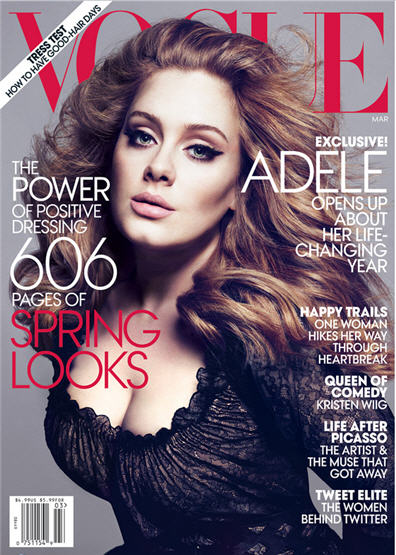
The most powerful fashion magazine

Vogue is a fashion and lifestyle magazine that is published monthly in 18 national and one regional edition by Condé Nast (British Vogue).

cover from 1917


In 1892 Arthur Turnure founded Vogue as a weekly publication in the United States sponsored by Kristoffer Wright. When he died in 1909, Conde Montrose Nast picked up the magazine and slowly began growing its publication. He changed it to a bi-weekly magazine and also started Vogue overseas starting in the 1910s. He first went to Britain in 1916, and started a Vogue there (Harvey 1991:17) , then to Spain, and then to Italy and France in 1920, where it was a huge success. The magazine's number of publications and profit increased dramatically under his management.

The current editor-in-chief of American Vogue is Anna Wintour, noted for her trademark bob and her practice of wearing sunglasses indoors. Since taking over in 1988, Wintour has worked to protect the magazine's high status and reputation among fashion publications. In order to do so, she has made the magazine focus on new and more accessible ideas of "fashion" for a wider audience (British Vogue). This allowed Wintour to keep a high circulation while discovering new trends that a broader audience could conceivably afford. For example, the inaugural cover of the magazine under Wintour's editorship featured a three-quarter-length photograph of Israeli super model Michael Bercu wearing a bejeweled Christian Lacroix jacket and a pair of jeans, departing from her predecessors' tendency to portray a woman's face alone, which, according to the Times', gave "greater importance to both her clothing and her body. ''Women are uniquely different, they require separent threatment and instruction'' (Ferguson 1983:190). This image also promoted a new form of chic by combining jeans with haute couture. Wintour's debut cover brokered a class-mass rapprochement that informs modern fashion to this day." Wintour's Vogue also welcomes new and young talent.


So why do we prefer read magazines such as Vouge rather than newspapers? McRobbie 1998: 173 said it clearly. 
Fashion writing is informative or celbratory, it is never critical, only mildly ironical... The editors and journalists rarely break ranks and produce more engaged and challenging writing on this subject.

 However this is not always true. Sometimes are designers not pleased by critic in magazines about their new collection. 

Much easier answer on this question is to learn and to enjoy. (Sacks, R. M. 2009). There is the motivation behind most, if not all, reading adventures. We read to further our knowledge and to enjoy the experience. Sometimes, the learning is forced upon us by a job or by a school, or sometimes it’s just the need for that innate pleasure of discovering something new. Other times, we read solely for pleasure—the pure joy of wandering through a good writer’s brain.


Reading is one of the best indicators of exactly who the human race is. We can’t help ourselves. As a race of beings, we have a fundamental need to know things. We are driven to explore and attempt to understand, whether it is the spiritual whys, or the scientific hows. It has always been that way. It will always be that way.
 
So, the reasons we read magazines are much the same as why we read anything. We read to learn and to enjoy!!!!!

Monday, February 27, 2012

Every magazine talk about.... !!!


Last week we spoke about who is more influential - magazines or blogs. This week everyone talking about it, not just magazines....
 

  “The great thing about London is that it lives and breathes fashion. The street is still the best way to get a snapshot of London style.” (Todd Lynn 2012).


London fashion week took place in London (in Summer House) from 17 - 22th February 2012.


Exhibition 

Situated over 2 floors instead of 4, the AW12 Exhibition saw a newly curated style with a focus on creating a more tailored and visually merchandised feel to the showcase.

New exhibitors for AW12 included footwear designers, Alain Quilici; New York based Alejandro Ingelmo; Julian Hakes London and Kat Maconie. Other newcomers included NEWGEN designers Huishan Zhang and Lucas Nascimento. The Terrace Space at Somerset House hosted a selection of accessories; new designers showing in this space included accessory designer Emma J Shipley and milliner Bernstock Speirs.

The Exhibition had merchandised feature areas for each of the returning BFC showcasing initiatives; NEWGEN, sponsored by Topshop featured some of London’s most innovative designers; Estethica, sponsored by Monsoon, gave a platform for eco-sustainable design; Headonism, showcased new British milliners supported by Ascot Racecourse; the BFC/Elle Talent Launch Pad and The Navy Board Room Collective, comprising of NEWGEN alumni, were located on the first floor (London fashion week 2012).

Going to fashion weeks is fun and exciting but why do we have it????

The answer is simply. Because of economy. Designers make designes, high street retailers copy it and you can buy similar clothes for much cheaper, often for prices in sale. This money from shopping goes to economy of country in form of tax. This support words of Belgian-American fashion designer Diane von Fürstenberg:
“The consumer has been trained to buy on sale. Why should she go out and spend money early in the season, when in fact come March and April and she can buy it in sale.” (WWD 2009).

The schedule of the week you can find on the link below:
http://voicesoffashion.co.uk/london-fashion-week-2012-schedule-2/


You can find more about London fashion week here: http://voicesoffashion.co.uk/london-fashion-week-2012/

Saturday, February 18, 2012

Who's more influential


My last post was about the fashion magazines of last century. When we move forward we meet more and more often with the term ''bloggs''.  A blog is a personal journal published on the World Wide Web consisting of discrete entries ("posts") typically displayed in reverse chronological order so the most recent post appears first. Blogs are usually the work of a single individual (blogger), occasionally of a small group, and often are themed on a single subject, (Blood, R. 2000).

So who's more influential nowadays? Magazines or blogs?  


            VS.


 Granted it’s the power blogs that consistently take the top spots in our raking of influential fashion blogs, but using the exact same ranking criteria, bloggers are edging out magazines who (often) have larger staffs and larger budgets when it comes to influencing readers online.

 The reason why we spend so much time on an objective ranking of fashion blogs, however, is precisely because there are people who still do ignore bloggers and independent publishers and try to write off the significant audience shift in fashion media as a passing fad. Print isn’t dead –advertisers will keep it alive; but digital is the future, and it’s a future where a multitude of strong individual voices can rival the influence of a more prominent, institutional few. That said, the structure of influential blogs is increasingly similar to that of print publications, and probably not so different from their online departments. While there are more than a few solo acts topping the rankings, increasingly it’s blogs with multiple editors, writers and support staff competing with and pushing the magazines out of the top spots.


Visit online granted blog at: http://www.grantedclothing.com/news/ 

Monday, February 13, 2012

The influence of fashion magazines

By the 1860s, stylish American women could see original designs by Charles Frederick Worth, the first true fashion designer, in the popular publication Harper’s Bazaar. As other designers appeared on the scene, their creations could also be seen in new fashion magazines. By the turn of the twentieth century, this was the primary method of spreading news of fashion trends from Paris, the seat of fashion.


At first, the gowns were illustrated with drawings, but as photography became more sophisticated in the early twentieth century, the fashion press used more and more photographs of new designs. At the same time, fashion and art were merging in the eyes of the artists, who dabbled in many of the arts. These artists not only painted, but also created textile designs and fashion illustrations. Some journals of the day printed both fashion illustrations and photographs, along with short articles on fashion by modern writers. Until the Second World War, even mainstream fashion journals like Vogue and Vanity Fair continued to publish fashion illustration by modern artists, encouraging the connections between fashion designers and visual artists.


Vogue functioned in America not only to provide sketches and patterns of fashions derived from Paris models, but also to promote French couture. One of France’s premier designers, Paul Poiret, wrote in a special thirtieth-anniversary edition of Vogue that the magazine "is today one of the best methods of communication with a distinguished clientele," revealing the importance for him of reaching the American clientele (Global conference, 2009.)


Have a look at early 1950s fashion magazines on the link below:

World War II

How was fashion in World War II? 


When 1942 came along all clothes and furniture had the familiar CC41 mark. It stood for "Civilian Clothing" and the 41 represents the year it first came in to being. This was a ruling by the government to keep the materials for both clothes and furniture to the barest minimum. At the same time keeping a smartness which most could afford as well as quality for the amount of coupons they had. The above double breasted coat would be about 16 coupons and cost 12 guineas. The coupon allowance was 66 to start off with but as time went on so the allowance for coupons went down to 60 in 1942, 40 in 1943 48 in 1944. A man's suit was 26 coupons, one hanky 1 coupon, a ladies woollen dress 14 coupons a blouse 5 coupons. Supplementary clothing coupons could be applied for if you were getting married or having a baby or if you had been bombed out. It was a bonus if anyone was lucky enough to get some parachute silk to make a dress. Plus making underwear from it too, (Olds, L. 2001)


If you are interested about this topic have a look at link below: ''World War II and Fashion: The Birth of the New Look''

http://digitalcommons.iwu.edu/cgi/viewcontent.cgi?article=1062&context=constructing

Wednesday, February 8, 2012

Fashion in 19th century

  Let's look back at 19th century and fashion in this century 


The influence of national features in dress in Europe had been declining since about 1675 and by 1800, fashionable dress design had become international. The character of the feminine wardrobe stemmed from Paris, the masculine from London.

Until about 1820 women's dress continued to reflect styles initiated by the French. These fashions, were supposedly based upon the classical dress of ancient Greece. Ladies wore loose, draped, high-waisted gowns in white colors. Women wore a minimum of thin garments with little underwear which made it an unsuitable mode of dress during the winters. To attempt to combat the chill, women adopted a threequarter-length overdress made from a warmer material and a variety of shawls, pelisses, and redingotes. The 1830s brought back more color, a tighter waistline at a more natural level. Fuller, shorter skirts, leg-of-mutton sleeves, large-brimmed hats or bonnets also became a norm.

The second half of the century was a time of prosperity in Europe. Despite wars, the upper classes dressed fashionably and women would prance about in their walking-dresses. Men's styles remained sombre, dignified, and slowly changing. The ladies fashions were changing ever faster. The technical advances and the capability for mass manufacturing were making fashionable dress available to a rapidly expanding middle class. The invention of the sewing machine and the development of the ready-to-wear trade, new marketing techniques, and the establishment of department stores were revolutionizing the fashion industry.


Dress from 1840 onward was dominated by a restrictive corset and framework underskirt. The fullness of the skirt was at first achieved by adding more layers of petticoats, leading to the crinoline petticoat of 1850. Named after the materials from which it was originally made, this petticoat was made of the farthingale and the hoop, a heavy underskirt reinforced by circular hoops. By 1856 the weight of the crinoline and the petticoats became unbearable, and the cage crinoline was invented. This was a flexible steel framework joined by tapes or string and having no covering fabric. 

In the 1860s, the shape of the crinoline changed into that of the rear bustle, which was fashionable in the 1870s and '80s. Only in the 1890s did the skirt return to a relatively slender shape, but there was no letup in the constrictive corset. In general, the styles of the late 19th century were elegant but not easy to wear. They restricted movement with their multiple layers, intricate decoration, and sheer quantity of material. 

19th Century Austrian Fashion

  
The fashion return all the time and Christian Dior is an example. 


This ball dress „Maria Louisa” from collection haute couture of „Christian Dior” fro the season spring-summer 1998. It is made of silk, synthetic wool and metal threads. The dress is a gift to the Metropolitan museum from fashion house „Christian Dior” - Paris. The dress is made from John Galliano for „Dior”. It is with loose crinoline silhouette, characteristic for the middle of 19th century.


If you are interested in fashion of 19th century, have a look at other blogges and links: 

Here is some example. I like this link a lot. It shows different underwear typical for this century, with lovely pics :)

http://www.angelfire.com/ar3/townevictorian/victorianfashion.html